Skip to content
home Harvard Magazine
E-mail updates

Sign up to be notified of new issues.

View a sample newsletter

Follow Harvard Magazine on Twitter
  • An episode Kenya would rather forget: Megan Shutzer '10 examines the lasting effects of the 2007 election violence http://ow.ly/E6Wo 22 hours 53 min ago
  • Telling the stories of mental illness and mental-health care in Ghana http://ow.ly/E6Uy 23 hours 45 min ago

 STAY CONNECTED


Having a summer gathering? Liven it up with music! Jazz vocalist Gretchen Bostrom can arrange a duo to a full band set up (piano, guitar, bass, sax/horn, drums/percussion) for your special event. www.myspace.com/gretchenbostrommusic; gretchenbostrom@gmail.com.

View more classifieds

An "Understandable" Complication

Coming to terms with postsurgical depression

by John F. Lauerman


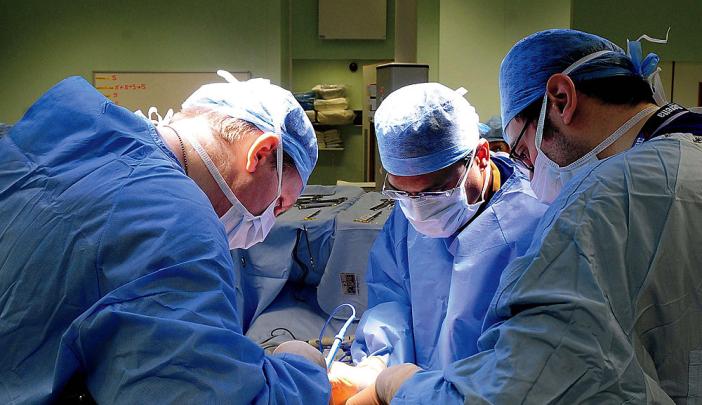
A phrase that applies to just about every surgical procedure might be “This is going to get worse before it gets better.” Surgeons themselves often acknowledge the bloodiness of their work: an art that begins with the rending of flesh ends in rejoining, and leads ideally to quick and more or less permanent healing.

The advent of sterile techniques and anesthesia has made surgery far less ghastly than it was when patients were as likely to die from the procedure itself as from the condition precipitating it. But if we no longer need to coax patients into the surgical theater, nor physically restrain them as the cutting begins, considerable anxiety remains for many patients with surgery in their future.

health
Illustration by Christopher Manhard

Surprisingly, however, most people tend to prepare for and cope with
the emotions surrounding surgery itself quite well, observes psychologist Nicholas Covino, an assistant professor in the department of psychiatry who works at Beth Israel Deaconess Medical Center and has studied the emotional reactions men have to prostate cancer. Patients know that they will be asleep during surgery, they are confident that their pain will be controlled, and they hope the surgery will make them better. “Most often, people see surgery as a stressor to be managed and gotten over,” he says. “Everybody is apprehensive about it, and relieved when it’s over. It’s like doing your taxes: in the crisis, the crisis rules and getting through it becomes the task.”

But the risks and the many other issues that surround operations are sufficient to make most of us think hard before consenting to one. Although anesthesiologists keep us from discomfort during surgery, patients still face the prospect of limited function, or even severe pain, during recovery. There is also the possibility of complications. Not so long ago, a close friend died as the result of an infection acquired during a routine, elective, surgical procedure. The episode lingers like a bright-red warning light.

Other psychological issues crop up during the recovery period. When we’re healthy, we tend to think of our bodies as somehow intact, both inviolable and homogene-ous. Major surgery can shatter that image, and with it the concept of self-sustaining health. The feelings of mortality, of loss, and of vulnerability can be profound, and recognizing depression in surgery’s aftermath becomes very important.


“Depression is a serious thing,” says Bernard Vaccaro, instructor in psychiatry at Brigham and Women’s Hospital, “because it can impair the ability to cooperate with rehabilitation. Depressed patients have a significantly higher rate of complications. If you’re not able to participate in rehabilitation, if you’re not as active, the whole process of recovery just slows down.”

When a patient appears depressed immediately after surgery, Covino seldom attributes it to pain or a sense of loss; rather, he suspects hidden complications, perhaps a problem with anesthesia, an infection, or some other underlying cause. Delirium is another condition that can occur during the one or two days immediately following surgery, especially among older people. Doctors recognize what’s happening when patients become incoherent, disoriented, or hallucinatory. In certain patients, delirium may appear in-stead as subdued behavior—much like depression. Either way, it’s important to treat the underlying problems—anemia, hypoglycemia, or other deficiencies or imbalances.

Postoperative depression, on the other hand, is more likely to occur well after the crisis of surgery has ended and the patient is back at home or even at work. That can make it particularly difficult for patients to cope with feelings about what they’ve endured and what their future is likely to be, or for family members and physicians to see and understand their feelings. Stigma continues to surround depression, adds Vaccaro, and many patients may hide their state of mind from families and caregivers alike.

“Physicians are notoriously poor at recognizing depressive symptoms,” says associate professor of psychiatry Theodore Stern, chief of the psychiatric consultation service at Massachusetts General Hospital. Even among primary-care physicians, depression goes unrecognized about 50 percent of the time, Stern explains. “Many doctors don’t know the criteria, and don’t speak with patients long enough to establish whether they have the symptoms of depression. Sometimes, physicians believe that being depressed after surgery is ‘understandable’ and unworthy of diagnosis or treatment.”

Many patients naturally feel anxious about their course of recovery. Their sleep may be disrupted; they may be uncomfortable because of postoperative pain; they may lack some of their former energy; their appetite may fall off due to the discomfort of having organs manipulated or cut. But if some or all of these symptoms occur together and last for two weeks or longer, that may indicate depression—which should be treated, whether it’s “understandable” or not. “Our job is to recognize the symptoms and see if they’re part of the depression syndrome,” says Stern. “And if so, to treat it.” (Despite their reputation for shirking all but the most pressing patient needs, most HMOs would probably cover this kind of treatment.)

What may complicate matters for many physicians is the unpredictability of patients’ reactions to surgery, and the wide variety of meanings the experience may hold for patients once they begin to reflect on it. One patient may cope extremely well with something as invasive and traumatic as a hip replacement, while another may have difficulty coming to terms with a far less physically traumatic arthroscopic joint procedure.

Covino says there simply is no way of being able to predict beforehand whether patients will be able to manage their own short-term postsurgical feelings or whether they’ll have longstanding depression requiring treatment. “The patient might have been depressed before the surgery, or might have a depressive personality ‘style,’” he explains. “You don’t know the meaning that surgery has for a person, for instance, unless they tell you. Their subjective sense of the significance of surgery and the way they deal with important events in their lives is going to have a lot to do with how they deal with this event.”

The most important factor in how someone feels about surgery after the fact is probably not how well the procedure was performed, but how well the patient is prepared to think and feel about the entire process. Talking with a surgeon or mental-health professional about details of the surgery and recovery can help provide some of that preparation, but talking with friends and family about their hopes and fears can help, too. “The more patients can be proactive and ask doctors what they’re likely to experience after surgery, the more they read about it and communicate with others about it,” says Stern, “the better chance they have of putting the experience in its proper perspective.”

Even though surgeons strive to improve their techniques all the time—to make them less traumatic, less invasive, more reliable—there is still much about surgery that patients find painful and frightening. Preparing realistically for an operation will help patients start the process of healing even before they get to the hospital.  

  1. May 13, 2009

    i had a cranioyomy for anueryism clipping, back in nov 2008, its been 6 months and have fallen into severe depression. my g.p. had blown me off and it took several months to get diagnosed, most thought i was crazy..but sure enuff i had an aneuryism. im afraid there is someother problems with me, and have seen every dr. for a total work up. so far, 2 polyps removed from my colon, and today i had an ultrasound of my gallbladder and ovaries..im feeling very nauseated and not myself, but ill wait for results, people are tired of my constant dr. appts….is it me? i know my body, and thank god i didnt give up in nov….tell me what you think

    ~lisa

  2. May 17, 2009

    i had apartial thyroid ectomy about 3 weeks ago and recovered very quickly but in the last week i have started to feel very low and i cannot explain same i am a psychuiatric nurse but have never come acrosss with a patient with same complaint can u advise?

    ~paul newell

  3. May 17, 2009

    There are some (many—-I’m an surgical nurse) surgeons who only address concerns re their particular specialized surgery. One example is is “Big” orthopedic surgeons that preform large spinal surgery or extensive other ortho surgery. Their post op bedside manner and followups seem to only focus on their work. Problems such as pnemonia, bladder/bowel issues, depression, etc, are quickly referred to other areas of specialities. This isn’t all bad,and patients should expect this. It would be really nice to have holistic approaching surgeons, but time contraints, etc, prevent this from happening most of the time. Anyway, I’ve vented (probably not a surprise that I;ve recently had surgery)

    ~Sally

  4. May 18, 2009

    After reading this pap, I feel really hopeless. I’ve experienced post-surgical depression twice and I know it is much more serious than this fluffy piece of writing lets on.

    ~Nick

  5. June 1, 2009

    I had spinal decompression with a cervical disc replacement 8 months ago. I great for a week then was hit with severe depression with constant thoughts of suicide. Not one of the doctors I saw would acknowledge that my depression was from the surgery except to say that I was depressed because I had faced my own mortality. This was NOT the case for me. I was happy with the surgery and results. The blanket of depression came out of the blue and has ruled my life ever since. I have tried antidepressants and stimulants only to have minimal results. I’m wondering if this will ever go or will I want to drive into a tree every time I get in the car. I know I’m not alone and this article was a help but it’s hard to find info on line. I don’t fit into the category of people who’s surgery resulted in pain or disappointment. I just want it to end and get my life back.

    ~Marianne

  6. June 20, 2009

    Actually I am quite relieved to read your comments and realise I AM NOT crazy! I am a little over 2 weeks post op and have been as chipper as a bird until 2 days ago. The “blues” blasted me, I cried all day the first day, then refused to go to therapy the 2nd day and have pouted and slept for all 3 days.I am trying now to focus on the “bigger” picture”. I asked for this surgery, I begged for it…Now why am I surprised that there will be some challenges in the recovery process. It’ time to get off my pitty pot and get this 4 more weeks out of the way, it really is ONLY a month!!!

    Suzanne

    ~suzanne

  7. June 26, 2009

    thanks for the tips…my had gone through incisional hernia ops ystdy and today i experienced this “post-ops depression” first hand….believe me its quite disturbing for those who luv the patient and are around his/her this in this period…..thanks once again…..

    ~humayun

  8. June 29, 2009

    today I had to google post surgical depression…i donated a kidney 2.5 months ago and i felt great…then i didnt. i am always sleepy and have no interest in anything…i joked that if i were on fire i would have to wonder if i had the energy to put myself out. i really dont care about anything…the reason i know this isnt me, is because this ISNT ME!!!—it has to be somehow attached to the surgery. i have a beautiful brand new grandson and i am embarassed to say even he doesnt put that spark into me. what is wrong???? please tell me that this goes away and i wont have to go on drugs…how long will this last…what caused it so late afterwards? any help will be appreciated, jb

    ~julie b

  9. July 12, 2009

    I had knee surgery 2 years ago and recovered from the surgery quite well, but I was VERY worried about the anesthesia because any time I had surgery prior (TMJ or Tonsils), I sunk into a deep and suicidal depression about 3 or so weeks post-surgery (and this is WITH me being on antidepressants,please note: I am an energetic and happy person just a little depressed chemically…cymbalta takes care of it).
    Well, that DEEP DARK HOLE happened again after the knee surgery only this time I had to go on medical leave from work and into intensive outpatient psychiatric therapy for 3 months to begin to get any sense of my self back. It was the most awful time in my life.
    Now I’m facing emergency surgery tomorrow under general anesthesia. I’m not worried about the surgery. Maybe it’s NOT the anesthesia like I previously though…but there’s SOMETHING going on and I’m scared to death that I’m going to go into that DEEP DARK HOLE of Depression again, complete with those suicidal thoughts (that just aren’t me).

    ~girlshooo

  10. July 14, 2009

    Paul, I had a total thyroidectomy just under two weeks ago and became very low and anxious a few days ago. I am also a mental health professional, and originally put my low mood and agitation down to post operative complications which the surgeon is currently too busy to rectify, which has left me feeling vulnerable and at the mercy of an uncaring health service and worried that if they don’t sort it out soon I will need further surgery, which is a very frightening prospect. I also think the level of thyroxine they put me on immediately after the op is not quite right yet, perhaps this needs looking into in your case if you are on thyroxine and still having a tough time?

    For everyone else who is struggling with feeling dreadful mentally after their operation, very much hope the sun comes out from behind the metaphorical clouds for you soon.

    ~Sarah

Add a new comment

Your email address is kept private and will not be shown publicly
  • Allowed HTML tags: <a> <em> <strong> <ul> <ol> <li> <blockquote> <span> <b> <i> <br>
  • Lines and paragraphs break automatically.
  • Web page addresses and e-mail addresses turn into links automatically.
  • SmartyPants will translate ASCII punctuation characters into “smart” typographic punctuation HTML entities.

Copyright ©1996—2009
Harvard Magazine Inc.
Contact the webmaster